Home / People

People

The faculty, students and alumni of the AMPIC Lab.

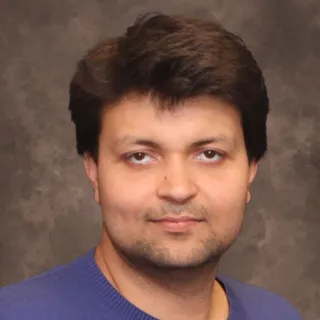
Portrait of Vishal Saxena, Ph.D.

Principal Investigator

Vishal Saxena, Ph.D.

Professor, Electrical and Computer Engineering
University of Delaware

  • OfficeEvans 214
  • LabEvans 118
  • Phone(302) 831-4365
  • Address140 Evans Hall, Newark, DE 19716

Dr. Vishal Saxena is a Professor in the Electrical and Computer Engineering at University of Delaware. His research is in Analog Electronic and Photonic integrated circuit (IC) design.

Dr. Saxena received the B. Tech. in Electrical Engineering from the Indian Institute of Technology Madras, India in 2002, and the M.S. and Ph.D. degrees in Electrical and Computer Engineering (ECE) from Boise State University in 2007 and 2010 respectively. From 2010 to 2016, he was an Assistant and then Associate Professor in the ECE Department at Boise State University. From 2016 to 2019, he was the Micron Endowed Professor of Microelectronics in the ECE department at University of Idaho. In Fall 2019, he joined the ECE department at UD as an Associate Professor. He has also held engineering positions in the semiconductor industry.

At University of Delaware, Dr. Saxena directs the Analog Mixed-Signal and Photonic Integrated Circuits (AMPIC) Lab and teaches courses in circuit design. His research interests include energy-efficient cross-physical layer links, CMOS photonic interconnects, RF/mmWave photonics, Continuous-time Delta-Sigma ADCs, and low-power VLSI for enabling embedded Artificial Intelligence.

Dr. Saxena's research has been continually supported by industry and federal agencies including NSF, DOD, and NASA. Dr. Saxena received the 2015 NSF CAREER, 2016 AFOSR Young Investigator Program (YIP) award, and 2019 DARPA Young Faculty Award (YFA) for his work on Analog electronic and CMOS photonic integrated circuits. He also received Keysight faculty research award and Idaho's Accomplished under 40 (AU40) award in 2016. He has given several invited talks, including TEDx, on his research and taught tutorials at international conferences including IEEE MWSCAS, SOCC, ICASSP. He is a member of the IEEE, ACM, Eta Kappa Nu and Tau Beta Phi. He has been an Associate Editor for the IEEE Transactions on Circuits and Systems-II: Express Briefs. Currently, he is serving on the steering committee for the IEEE International Midwest Symposium on Circuits and Systems (MWSCAS), VLSI committee of the IEEE International Symposium on Circuits and Systems (ISCAS), and Guest Editor for Journal of Low Power Electronics and Applications (JLPEA). He was the founding Chair of the Boise section of the IEEE Solid-State Circuits Society (SSCS) chapter.

The lab today

Current team

PhD Students

Shubham Mishra

Shubham Mishra

High Speed Optical Interconnects

About

Shubham Mishra is a Ph.D. student in Electrical and Computer Engineering at the University of Delaware, where he has been a graduate research assistant in the AMPIC Lab under Prof. Vishal Saxena since 2021. His research is on electronic-photonic IC co-design for high-speed silicon-photonic optical interconnects, and the CMOS circuits that drive and control them.

His work includes a hybrid CMOS-photonic 25 Gb/s microring transmitter with a direct-coupled driver (IEEE ISCAS 2022), power-linear DACs for configuring and controlling silicon photonic ICs (IEEE ISCAS 2023), and a sub-1 pJ/bit, laser-power-independent 32 Gb/s silicon photonic electro-absorption modulator driver in 65 nm CMOS (IEEE ISCAS 2024). He co-authored a tutorial brief on optical interconnects using hybrid integration of CMOS and silicon-photonic ICs in IEEE Transactions on Circuits and Systems II (2024), and has contributed to the lab's low-power thermo-optic phase shifters and programmable photonic meshes with undercut heaters, published in Optics Letters and the Journal of Lightwave Technology (2026).

Before his Ph.D., he worked at NXP Semiconductors in Noida, India, on mixed-signal IP design, developing an automotive-grade discrete-time Delta-Sigma modulator. In summer 2025 he was a high-speed and mm-wave ASICs research intern at Nokia Bell Labs in New Providence, New Jersey, where he worked on high-speed opto-electronic front ends for 6G wireless.

He studied Electrical and Computer Engineering with a focus on integrated circuit design at the Indian Institute of Technology (IIT) Mandi.

Research interests: high-speed optical interconnects, electronic-photonic integrated circuits, and mixed-signal and mm-wave circuit design.

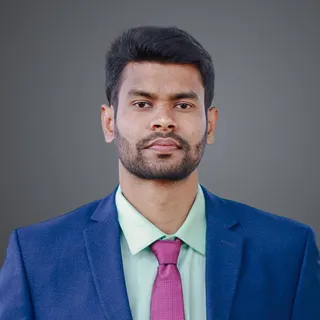
Aly Moussa

Aly Moussa

Hybrid CMOS-Photonic RF Integrated Circuits
About

Aly Moussa is a Ph.D. candidate in Electrical and Computer Engineering at the University of Delaware, where he is a Graduate Research Assistant under the supervision of Prof. Vishal Saxena. He received his B.Sc. in Electronics and Telecommunications Engineering from Cairo University in 2024.

His research focuses on analog and mixed-signal integrated circuit design, silicon photonics, and hybrid electronic–photonic systems. His current work involves developing a hybrid CMOS–silicon-photonic coherent RF channelizer for DC–24 GHz spectrum sensing, integrating compact arrayed waveguide gratings (AWGs), coherent optical I/Q receivers, and CMOS transimpedance amplifiers. His experience includes photonic IC design and tapeout, RF and analog circuit design, chip-level integration, and high-speed circuit characterization.

At IEEE MWSCAS 2025 he presented his first-author paper, “A Hybrid CMOS Photonic RF Channelizer: System Design and Analysis,” and co-authored “CMOS-RRAM Neuromorphic Accelerators Using Multi-Bit Neurons,” on mixed-signal neuromorphic computing with CMOS neurons and RRAM synapses.

Research interests: high-speed analog and mixed-signal circuits, RF photonics, and electronic–photonic integrated system co-design.

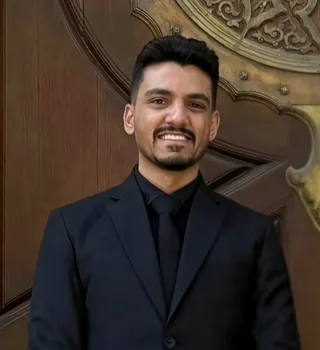
Noor Afsary

Noor Afsary

Reconfigurable Photonic Integrated Circuits
About

Noor Afsary is a Ph.D. student in the Department of Electrical and Computer Engineering at the University of Delaware, working in the AMPIC Lab under Prof. Vishal Saxena. Noor’s research focuses on low-power, CMOS-compatible silicon photonic devices for reconfigurable photonic integrated circuits.

A central thread of this work is reducing the power cost of thermo-optic tuning. Noor has demonstrated a foundry-compatible silicon thermo-optic phase shifter that uses a substrate-undercut doped-silicon heater to achieve a π-phase-shift power (Pπ) of 0.74 mW with low switching latency, published in Optics Letters (2026). Building on this, Noor developed a Mach–Zehnder thermo-optic switch using two 2×2 MMI couplers and an undercut resistive heater, operating at 0.86 V, presented at CLEO 2026. Noor’s work also extends to passive device design, including a specification-driven 3×3 multimode interference coupler optimized with particle swarm methods and a graded-index 3 dB adiabatic directional coupler.

Before joining UD, Noor completed undergraduate studies in physics at Khulna University, Bangladesh, where the research spanned polymer optical waveguides and first-principles materials analysis for photonics. That work includes polarization-independent 3D polymer Mach–Zehnder interferometers, polarization beam splitters with reduced crosstalk, thermally reliable electro-optic modulators with low half-wave voltage, and DFT-based studies of TaPO₅ and tantalum–niobium pentoxide as waveguide platforms for near-infrared photonic integration. Noor has published in Optics Letters, Applied Optics, Optics Continuum, Heliyon, and Physica Scripta.

Research interests: silicon photonics, thermo-optic phase shifters and switches, MMI and adiabatic couplers, inverse and optimization-driven photonic design, programmable photonic circuits.

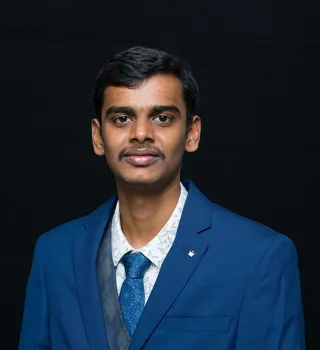
Hesham Maher

Hesham Maher

Optical Modulator Driver Integrated Circuits
About

Hesham Maher is a first-year Ph.D. student in Electrical and Computer Engineering at the University of Delaware, working in the AMPIC Lab under Prof. Vishal Saxena since September 2026. His research is on optical modulator driver integrated circuits for electronic-photonic AI accelerators.

He received his B.Sc. in Electronics and Communications Engineering from Ain Shams University, Cairo, with honors in 2026. As a Sawiris Foundation Scholar, selected from 150 applicants, he spent the 2024–2025 academic year at the University of Pennsylvania, where he took graduate courses in analog and digital IC design, VLSI and solid-state devices, and served as a teaching assistant for ESE 5050.

His design experience includes the receiver of a high-speed PCIe Gen 6.0 SerDes transceiver for his graduation project, sponsored by MediaTek. He also completed analog IC design training at the Information Technology Institute (ITI), with a variable-gain amplifier, a bandgap reference and a folded-cascode OTA designed using the gm/ID methodology, as well as Siemens EDA training in data converters and MOSFET modeling.

Research interests: analog mixed-signal and photonic integrated circuits, high-speed drivers and SerDes circuits, and the physical-layer (PHY) design of AI accelerators.

Vignesh Balasundaram Sathiya Devi

Vignesh Balasundaram Sathiya Devi

Electronic-Photonic AI Accelerator Integrated Circuits

About

Vignesh Balasundaram Sathiya Devi is a Ph.D. student in the Department of Electrical and Computer Engineering at the University of Delaware, working in the AMPIC Lab under Prof. Vishal Saxena.

Vignesh’s research focuses on electronic-photonic integrated circuits for AI acceleration. Moving data and performing matrix arithmetic dominate the energy cost of modern machine learning hardware. Vignesh studies how silicon photonics can carry out these operations at high speed and low energy, and how mixed-signal CMOS circuits can drive, read out and calibrate the photonic core. The work spans photonic device and system modeling, the design of the electronic interface circuits, and the co-design of both chips so they can be packaged and tested together.

Research interests: silicon photonics, photonic neural networks and AI accelerators, mixed-signal CMOS circuit design, electronic-photonic co-design.

Jiaxin Chen

Jiaxin Chen

Programmable CMOS Neurons for Bio-realistic Neuromorphic Computing

About

Jiaxin Chen is a Ph.D. student in the Department of Electrical and Computer Engineering at the University of Delaware, working in the AMPIC Lab under Prof. Vishal Saxena.

Jiaxin’s research is in neuromorphic computing, the design of hardware inspired by how the brain processes information. The current focus is programmable CMOS neuron circuits that can reproduce a wide range of biologically realistic spiking behaviours while staying compact and energy efficient. These neurons are building blocks for spiking neural network hardware, where information is carried by the timing of spikes and learning can happen directly on chip. The work covers analog and mixed-signal circuit design, simulation of neuron dynamics, and integration of neurons with synapse arrays into larger networks.

Research interests: neuromorphic engineering, spiking neural networks, analog and mixed-signal CMOS design, energy-efficient AI hardware.

Alumni

Where our graduates are now

  • Phase III Physics
  • Cisco Systems
  • Texas Instruments
  • ServiceNow
  • Arm
  • Maxim Integrated
  • Micron
  • Cirrus Logic
  • Qualcomm

PhD graduates

  1. 2024

    Anuar Dorzhigulov, Ph.D.

    DissertationHybrid CMOS-NVM Integrated Circuits for Energy-Efficient Neuromorphic Computing and Edge-AI

    Phase III Physics LLC
  2. 2023

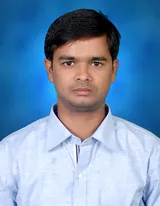
    Md Jubayer Shawon, Ph.D.

    DissertationLarge-Scale Reconfigurable Silicon Photonic Integrated Circuits for RF Photonics and Optical Signal Processing
    Cisco Systems, NJ

    About

    Jubayer received his B.S. degree from BUET in Bangladesh and M.S. degree in Electrical and Computer Engineering at the University of Idaho in Fall 2019. He joined the AMPIC group in Fall 2017 and graduated with his PhD in Summer of 2023.

  3. 2021
    Ruthvik Vaila

    Ruthvik Vaila, Ph.D.

    DissertationDeep Convolutional Spiking Neural Networks for Image Classification

    AI Engineer at ServiceNow, Boise, ID

    About

    Ruthvik Vaila received his Bachelor's degree in Electrical and Electronics Engineering from the National Institute of Technology (NIT) Calicut, India, in 2014. He joined Boise State University in Fall 2015 and completed his PhD in 2021 on neuromorphic deep learning, working with Dr. John Chiasson. He has also worked on IoT and road detection for autonomous vehicles, and his primary interests are in Artificial Intelligence and Machine Learning.

  4. 2020

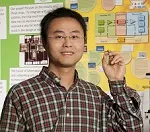
    Rui Wang, Ph.D.

    DissertationSilicon Photonics: Overview, Building Block Modeling, Chip Design and its Driving Integrated Circuits Co-Design
  5. 2016
    Kehan Zhu

    Kehan Zhu, Ph.D.

    DissertationIntegrated Circuit Design for Hybrid Optoelectronic Interconnects

    Startup (previously Maxim Integrated)

    About

    Kehan received the B.S. degree from Xiangtan University, China, 2006, the M.S degree from Jiangnan University, China, 2008, both in microelectronics engineering. He graduated with his PhD in December 2016 following the successful defense of his dissertation, "Integrated Circuit Design for Hybrid Optoelectronic Interconnects." During this research, he taped-out and tested two 130nm BiCMOS designs and one SOI photonic chip and demonstrated a hybrid PAM-4 transmitter.

  6. 2016
    Xinyu (Tomas) Wu

    Xinyu (Tomas) Wu, Ph.D.

    DissertationAnalog Spiking Neuromorphic Circuits and Systems for Brain- and Nanotechnology-Inspired Cognitive Computing

    Micron Inc, Boise, ID

    About

    Xinyu Wu graduated from Fudan University in 2001 with a Bachelor's degree in Electronics Engineering. He finished his Master's degree from Fudan University in ASIC design for high performance computing in year 2004. He graduated in Fall 2016 with his doctoral dissertation on "Analog Spiking Neuromorphic Circuits and Systems for Brain- and Nanotechnology-Inspired Cognitive Computing." During this path-breaking research he demonstrated first CMOS Neurons that can interface with dense RRAM synapses; and novel CMOS-RRAM circuit motifs to realize energy-efficient spiking neural networks that can be applied to real-world pattern recognition, a precursor to chip-scale Deep Learning.

  7. 2014

    Sakkarapani Balagopal, Ph.D.

    DissertationHigh-Speed Delta-Sigma Data Converters for Next-Generation Wireless Communication

    Cirrus Logic

    About

    Sakkarapani demonstrated the first continuous-time Delta-Sigma ADC with a two-step quantizer for wideband data conversion. Read his dissertation.

Masters graduates

  • Virginia Molina2017

    Masters (non-thesis), Boise State 2017. Integrated photonic filter design

    First placement: ARM Inc, Cambridge, UK
  • Rajaram Mohan Roy Koppula2012

    Masters Thesis: A Mixed Signal Design Flow Applied to a Continuous Time Delta Sigma Converter (BSU 2012)

    Qualcomm Inc, Phoenix, AZ

Postdocs, research scientists and visiting scholars

  • Madeline Dillon2023 to 2026

    Research Scientist

  • Xinyu Wu2016 to 2017
  • Qiang Chen2015

    Neuromorphic autonomous robot navigation (with Dr. John Chiasson)

    About

    Qiangchen graduated from the Naval University of Engineering in 2003 with a Bachelor's degree in Electrical Engineering & Automation. He finished his Masters degree from the Huazhong University of Science and Technology in Control Engineering in 2006. He was a visiting scholar in Dr. Chiasson and Dr. Saxena's research group in 2015. His research interests are navigation for autonomous mobile robots, graphical information processing for reasoning and control, distributed neural computation.

Undergraduate and summer researchers

  • Robin Depto2023 to 2026

    UD undergraduate researcher

  • Rosnel Leyva-Cortes2025

    NSF REU Summer Research 2025: Silicon Meets Synapse: Generative Analog Circuits and Device Characterization for AI

  • G. Pennisi2024

    UD UG Summer Researcher 2024: Automatic PIC Characterization Setup using Edge Coupled Fiber Arrays

  • Nora Charles2024

    UD UG Summer Researcher 2024: Automatic PIC Characterization Setup using Edge Coupled Fiber Arrays

  • Marvin Brayan Nunez Zuniga2024

    Columbia Summer Research Program 2024

  • Chase Lawrence2023

    NSF REU and UD UG Summer Researcher 2021

  • Haixin Zhao2023

    UD UG Summer Researcher 2023

  • Gregg Marella2022

    UD undergraduate researcher

  • Furdeen Hassan2022

    UD undergraduate researcher

  • Ben Weinel2021

    UD UG Summer Researcher 2021

    Texas Instruments, Dallas, TX
  • Susan Arnopolin2020

    NSF REU researcher 2020

  • Keegan Miley Hunter2018

    NSF REU researcher 2018 at UI

  • Tyler Bevan2012

    NSF STEP researcher 2012 at BSU